Why Core Web Vitals are the #1 Priority for E-Commerce Success
As we navigate the digital landscape of 2026, the line between a "website" and a "brand experience" has completely vanished. For e-commerce entrepreneurs and marketing directors, the stakes have never been higher. Gone are the days when simply having a functional cart and a few high-volume keywords could guarantee a steady stream of revenue.
Introduction: The New Standard of Digital Retail
As we navigate the digital landscape of 2026, the line between a "website" and a "brand experience" has completely vanished. For e-commerce entrepreneurs and marketing directors, the stakes have never been higher. Gone are the days when simply having a functional cart and a few high-volume keywords could guarantee a steady stream of revenue.
Today, Google’s algorithms have achieved a level of human-like discernment. They no longer just "read" your content; they "feel" the user experience. At the center of this evolution sit the Core Web Vitals (CWV). Originally introduced years ago, these metrics have been refined into the ultimate benchmark for site health. In 2026, if your Core Web Vitals aren't in the "Green" zone, your business isn't just losing rankings—it’s losing its pulse.
This guide will break down why these technical vitals have become the #1 priority for e-commerce and how Prateeksha helps brands turn these metrics into competitive moats.
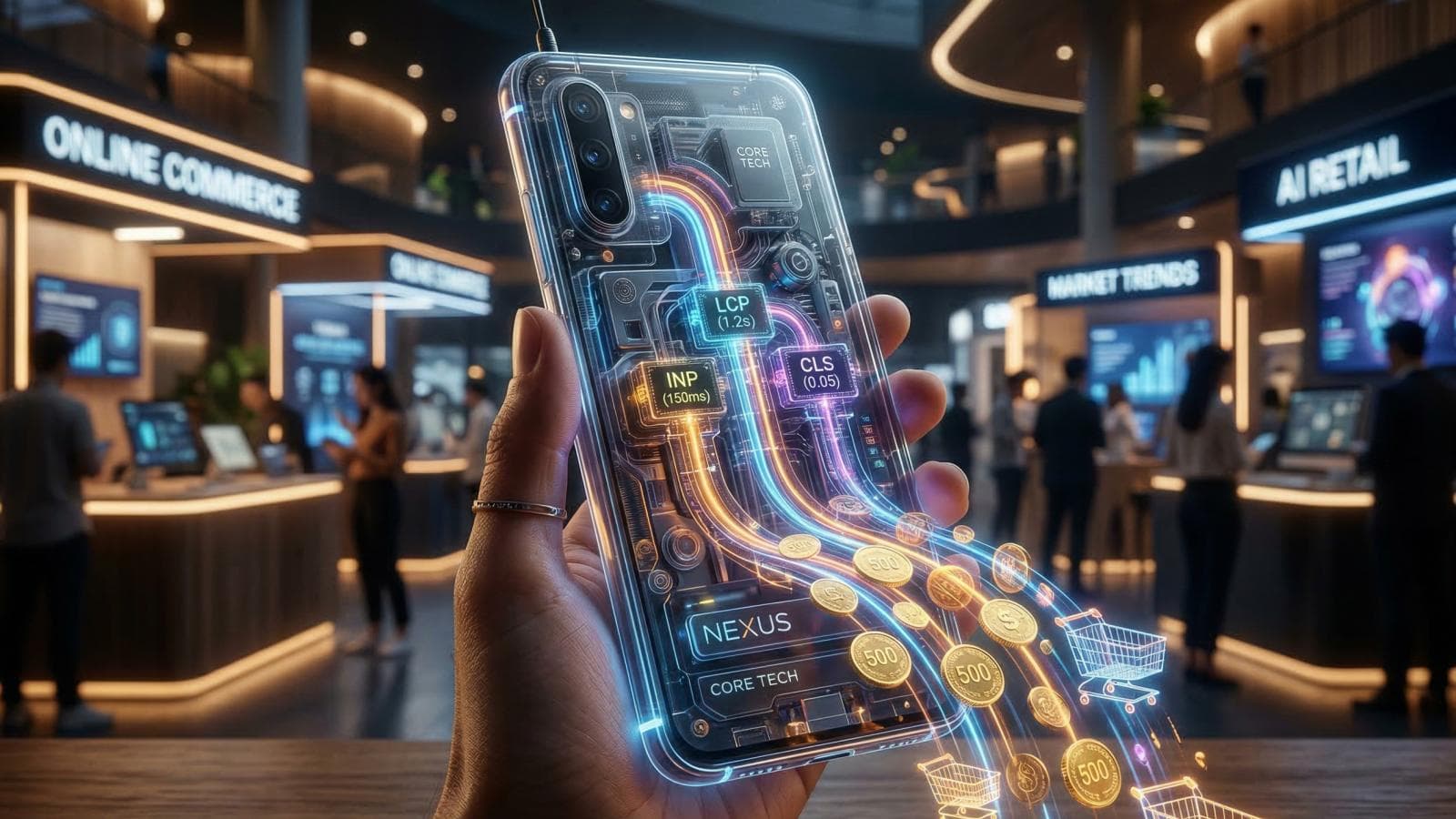
Part I: Decoding the Trinity of User Experience in 2026
To understand why these metrics dominate the conversation, we must first understand what they actually measure in the context of a modern shopping journey.
1. Largest Contentful Paint (LCP): The Hook
LCP measures perceived load speed. In the context of a product detail page (PDP), this is usually the time it takes for your primary product image or hero video to become visible.
The 2026 Standard: Under 1.2 seconds.
The E-commerce Reality: If a shopper clicks an ad from social media and lands on a page that stays blank for more than two seconds, the "bounce" is almost guaranteed. In 2026, high-speed 5G and satellite internet have spoiled consumers; "fast" is no longer a feature, it is a baseline requirement.
2. Interaction to Next Paint (INP): The Conversation
Replacing the older FID (First Input Delay), INP became the gold standard for responsiveness in 2024 and has been further weighted in 2026. It measures the latency of every interaction a user has with the page.
The E-commerce Reality: Think about a user clicking a size variant or tapping the "Add to Cart" button. If there is a perceptible lag between the tap and the visual response, the user feels a "disconnect." This friction creates subconscious doubt about the site’s security and reliability.
3. Cumulative Layout Shift (CLS): The Trust
CLS measures visual stability. It tracks how much elements move around while the page is still loading.
The E-commerce Reality: Nothing destroys trust faster than "click misplacement." If a user goes to click "View Cart" but a late-loading promotional banner pushes the page down, causing them to click a "Sign Up for Newsletter" popup instead, the user experience is fractured. In 2026, Google penalizes intrusive layout shifts more heavily than ever before.
Part II: Why CWV is the #1 Metric for E-Commerce (The Business Case)
1. The SEO "Tie-Breaker" and AI Overviews
In 2026, Google’s Search Generative Experience (SGE) and AI Overviews dominate the top of the SERPs. These AI engines prioritize sites that provide the cleanest data and the fastest responses. When the AI is choosing which products to feature in its "Best Coffee Makers of 2026" summary, it prefers sites with impeccable Core Web Vitals because it knows the user will have a positive experience upon clicking through.
CWV acts as the ultimate tie-breaker. When ten stores sell the same Nike sneaker at the same price with similar domain authority, the store with the 95/100 PageSpeed score gets the #1 spot.
2. Radical Impact on Conversion Rates (CR)
We have moved past the "3-second rule." Data from 2026 retail studies shows that sites loading in 0.5 to 1 second see conversion rates 3x higher than those loading in 3 seconds.
E-commerce is emotional. A fast site creates a "flow state" where the transition from "I want this" to "I bought this" is frictionless. Every millisecond of LCP or INP lag gives the customer a "micro-moment" to reconsider their purchase. By optimizing vitals, you aren't just doing SEO; you are performing direct conversion rate optimization (CRO).
3. Lowering Customer Acquisition Costs (CAC)
The cost of digital advertising on platforms like Meta, TikTok, and Google has skyrocketed in 2026. To maintain profitability, e-commerce brands must maximize the value of every paid click.
The Math: If you spend $10,000 on ads with a 1% conversion rate, your CAC is $100. If improving your Core Web Vitals bumps your conversion rate to 1.5%, your CAC drops to $66. Optimization is the most effective way to "get a raise" from your existing ad budget without spending an extra penny on media.
Part III: The 2026 Technical Framework for Optimization
Optimizing an e-commerce store—especially one with thousands of SKUs—requires a surgical approach. Here is the framework Prateeksha uses to achieve "Green" scores for our clients.
1. Solving the LCP Crisis (Loading)
The biggest enemy of LCP in e-commerce is "image bloat."
AVIF is the Standard: In 2026, WebP is considered the "old" format. We transition all assets to AVIF, which provides 30% better compression than WebP without losing detail in high-end product photography.
Priority Hints: We use
fetchpriority="high"on the main product image. This tells the browser to download the hero image before it even thinks about loading the tracking pixels or chatbot scripts.Edge Side Includes (ESI): We move logic to the "edge" (Cloudflare/Fastly) so the initial HTML is generated and delivered in under 200ms.
2. Mastering INP (Responsiveness)
E-commerce sites are notorious for "Third-Party Script Fever." Every marketing department wants a heatmap, a chatbot, a social proof popup, and three different analytics tags.
Script Auditing: We use "Request Map" analysis to see which scripts are "locking" the main thread.
Web Workers: We move non-essential tasks (like analytics and chat) to Web Workers. This allows the main thread to stay open and ready to react to a user’s "Add to Cart" click instantly.
Debouncing Inputs: For search bars and filters, we implement advanced debouncing to ensure the UI doesn't stutter while the user is typing.
3. Eradicating CLS (Visual Stability)
Aspect Ratio CSS: We ensure every image container has a pre-defined
aspect-ratioin the CSS. This reserves the exact pixel space before the image even begins to download.Skeleton Screens: Instead of showing a blank white space while "Recommended Products" load, we use animated skeleton loaders. This keeps the layout rigid and provides a better "perceived" experience.
Font Preloading: We preload critical brand fonts to prevent "Flash of Unstyled Text" (FOUT), which can often trigger a minor but penalizable layout shift.
Part IV: The Hidden Dangers of "App Bloat" in 2026
One of the most common issues we see at Prateeksha is the "Platform Trap." Whether you are on Shopify, Magento, or WooCommerce, the ease of installing "one-click apps" is a double-edged sword.
In 2026, a typical e-commerce store has 15-20 active plugins. Each one adds JavaScript. Each one increases the INP and LCP.
The Prateeksha Strategy: We perform a "Value-to-Velocity" audit. If an app provides a 2% lift in sales but slows the site down by 15%, it is actually costing the brand money in lost SEO rankings and increased bounce rates. We often replace heavy third-party apps with custom, lightweight code that performs the same function without the performance tax.
Part V: How to Monitor and Maintain Your Vitals
Core Web Vitals are not a "set it and forget it" project. They are a living metric.
Real User Monitoring (RUM): While "Lab Data" (Lighthouse) is good for development, Google ranks you based on "Field Data" (actual users). We help brands set up dashboards that track real-world user experiences in real-time.
Performance Budgets: We implement "Performance Budgets" in the development workflow. If a new feature or high-res video exceeds the set budget for LCP, the code cannot be deployed until it is optimized.
Part VI: Why Prateeksha is the Partner of Choice in 2026
At Prateeksha, we view web performance through the lens of a business owner, not just a developer. We understand that your website's ultimate goal is to generate revenue.
Our specialized e-commerce team has spent years perfecting the art of "Invisible Optimization." We ensure your site looks beautiful and features high-resolution media, but we deliver it through a technical architecture that Google's bots—and your customers' devices—can process at lightning speed.
Our 2026 E-Commerce Stack includes:
Headless Commerce Expertise: Decoupling the front end from the back end for unparalleled speed.
AI-Driven Asset Optimization: Using machine learning to perfectly compress and serve images based on the user's specific device and connection speed.
Global CDN Architecture: Ensuring your store is just as fast in London as it is in New York or Mumbai.
Conclusion: The Future belongs to the Fast
As we move further into 2026, the digital divide will only grow. On one side will be the "Legacy Stores"—slow, clunky, and increasingly invisible to search engines. On the other will be the "Performance Leaders"—brands that treat Core Web Vitals as their #1 priority, enjoying high rankings, low ad costs, and soaring conversion rates.
Your Core Web Vitals are more than just numbers on a screen; they are a direct reflection of how much you value your customer's time.
Don't let your competitors outrun you. Are you ready to see where your store stands in 2026? Visit Prateeksha.in today to request a Comprehensive Core Web Vitals Audit. Let our team of experts turn your technical performance into your most powerful sales engine.